Research project
The Music of Ancient Rome
Exploring Roman street music through evidence, instruments and musical practice.
The project
What might the music of ordinary Romans have sounded like?
Music was part of Roman life, but the music itself has largely disappeared. My research began not with elite or ceremonial music, but with the musicians who might have played in streets, taverns and other everyday settings.
The project asked what could be learned by bringing archaeological, literary and visual evidence together with reconstructed instruments, composition and performance. Rather than attempting to reproduce a single definitive version of Roman music, the aim was to test what the surviving evidence makes musically possible.
The musicians
Who were the musicians?
Understanding the musicians meant thinking about more than the instruments they played.
Social and economic circumstances affected what instruments a working musician might have been able to own, the materials from which those instruments were made, and how musical knowledge could have been learned and transmitted.
This shifted the research away from treating surviving instruments simply as museum objects. The question became not only “what instruments existed?”, but “how might musicians actually have used them together?”
The ensemble
Reconstructing the ensemble
The ensemble developed around five principal sound groups:
- IVoice
- IILyre
- IIIPandoura
- IVTibia/Aulos
- VPercussion
Bringing these musical elements together exposed practical problems that are difficult to see from archaeological and textual evidence alone.
The instruments needed to function within a compatible tonal framework. Their available notes and tuning affected the possibilities for composition, while their very different acoustic properties created problems of balance. In particular, the penetrating sound of the reed-driven tibia/aulos could easily overwhelm quieter stringed instruments.
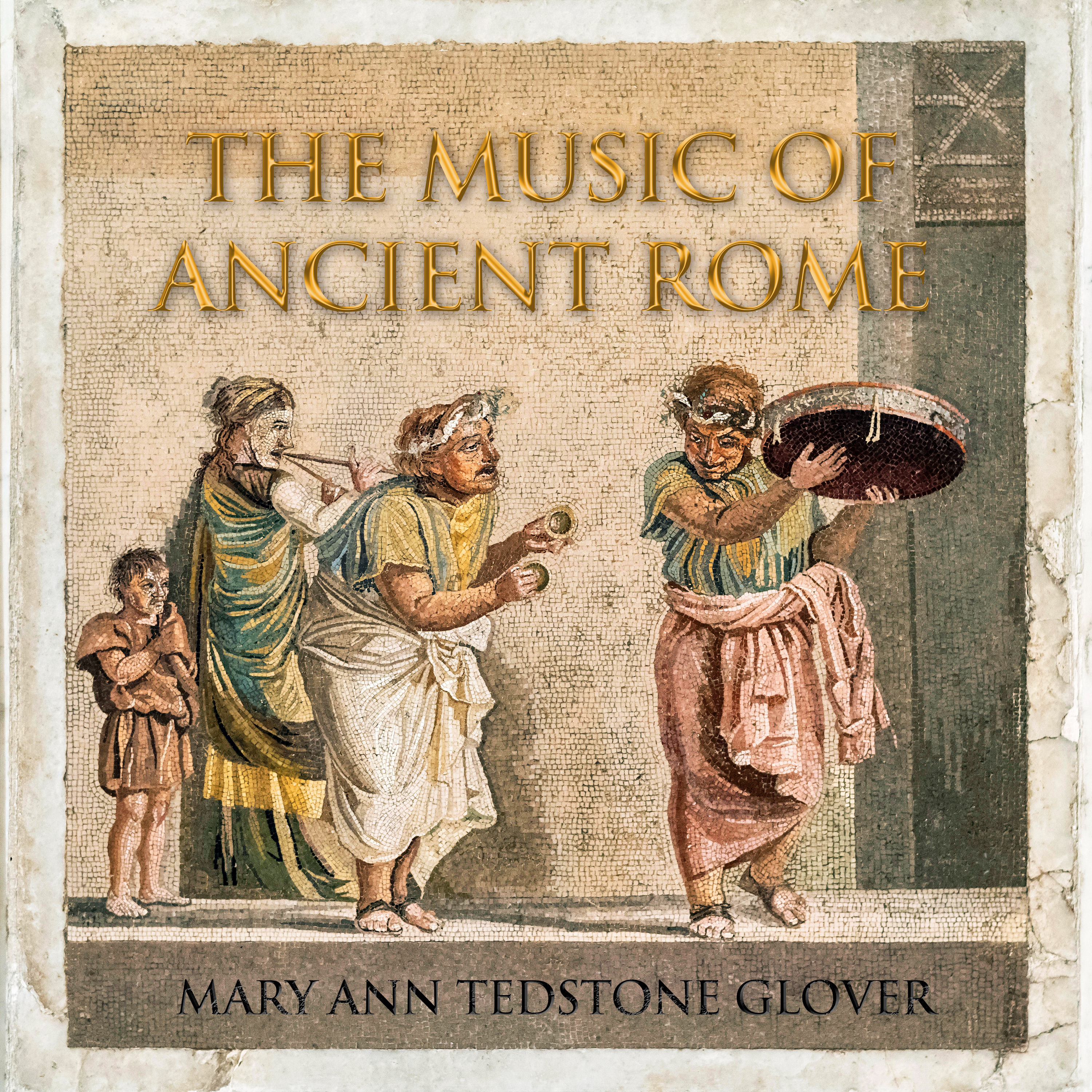
Visual evidence showing instruments such as lyre and aulos being played together therefore became more than an image of Roman musical life. It presented a practical musical question that could be tested through performance.
In the studio
Taking the research into the studio
The next stage was to move from evidence and hypothesis into musical practice.
Reconstructed instruments were brought together with experienced musicians and used as working instruments rather than simply as reproductions of archaeological objects. Composition became a way of testing the research. Questions of tuning, range, balance, technique and ensemble playing had to be solved in sound.
This process exposed problems that were not always apparent from studying texts, images or surviving objects alone. An instrument might appear compatible with another in the archaeological or visual record, for example, but putting the two together could reveal substantial differences in volume, range or musical function.
The studio therefore became part of the research process. Musical decisions were not simply added after the research had been completed. Making music generated new questions and provided another way of interrogating the evidence.
Rattlecups
Rattlecups: when an object becomes an instrument
The investigation of Roman rattlecups became a particularly important example of this approach.
Rattlecups are ceramic vessels containing loose material that produces sound when the vessel is moved. Reconstructing and experimenting with them allowed their sonic behaviour to be investigated through repeated practical testing.
Experimenting with different ways of holding and sounding the reconstructed vessels revealed a wider range of sonic possibilities than their physical form alone might suggest. These experiments raised further questions about how rattlecups may have been handled, sounded and experienced.
What began as an attempt to understand an unusual Roman sound-producing object therefore developed into a separate strand of practice-based archaeomusicological research.
This research is explored further in “At the Sound Edge of the Symposium: Rattlecups, Threshold Sound, and Practice-Based Archaeomusicology,” now accepted for publication by Frontiers.
Recording
Recording an ensemble
The final recordings retained the interaction between musicians wherever possible.
Rather than constructing an apparently ancient ensemble entirely through isolated recordings and digital editing, the project placed musicians and reconstructed instruments into a shared musical environment. This allowed balance, timing, articulation and response between performers to become part of the resulting music.
The recordings were therefore both creative works and the outcome of an experimental process: evidence was translated into musical decisions, those decisions were tested through performance, and the results fed back into the research.
The album
The Music of Ancient Rome
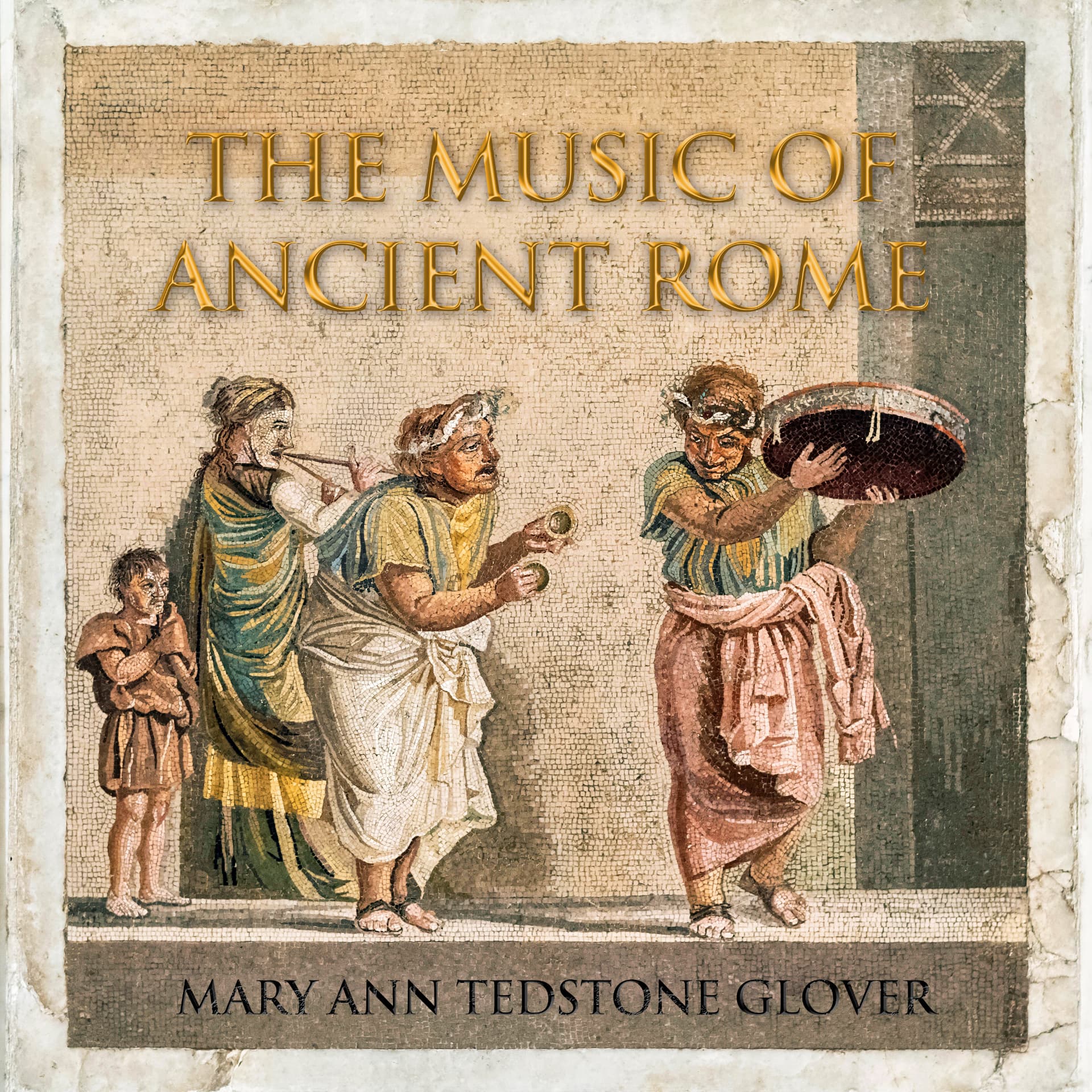
The research culminated in The Music of Ancient Rome, released by Integrity Music in 2021.
The album brought reconstructed ancient instruments, composition and performance together to create a complete body of recorded work arising from the research. Rather than presenting the music as a definitive reconstruction of Roman repertoire, the album explores what becomes possible when surviving evidence is translated into musical practice.
The project formed part of my doctoral research, Writing Music for an Ancient Roman Ensemble, completed at Bath Spa University in 2023.
Reach
From research to a wider audience
Since its release, The Music of Ancient Rome has reached audiences well beyond the original research project.
The album has received more than 500,000 streams, with Bacchus alone reaching around 250,000 streams.
The research and music have been featured in The Times, The New European, The Sunday Post and Songlines, as well as on BBC World Service Outlook and BBC Radio 3.
The Roman research formed part of a wider body of historically informed composition exploring the musical worlds of antiquity. Related work from this practice has subsequently reached film and commercial audiences, including music used in the Oscar-nominated short film Our Uniform and a campaign for Hyundai Middle East and Africa.
In 2024, the album was entered for Grammy consideration.
Legacy
From Rome to Ancient Sound Lab
The Roman project established an approach that now underpins Ancient Sound Lab.
It demonstrated that composition, reconstruction, performance and recording can do more than communicate research after it has taken place. They can become research methods themselves.
Working with reconstructed instruments exposed practical questions that were difficult to reach through texts and objects alone. Performance generated new hypotheses. Studio experimentation revealed relationships between instruments, musicians and sound. The investigation of rattlecups developed into a new strand of research in its own right.
Ancient Sound Lab develops that approach further, using evidence and musical practice together to investigate the sound worlds of the ancient past.
Ancient Sound Lab
Back to top